Salvage Lotus for Sale at Auction
4Filter
Search filters

Time left to place preliminary bid
- days
- hours
- min
- sec
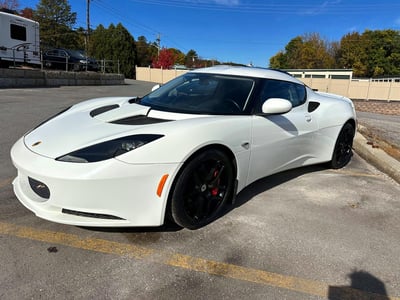
Current bid Preliminary bid $25,500 USD
Vehicles sold “as is - where is”, all sales are final.
- VIN SCCLMDTU3DH******
- Lot number 73259466
- Location MA - North Billerica
- Damage Mechanical
- Odometer 33,833 mi (actual)
- Date of auction

Time left to place preliminary bid
- days
- hours
- min
- sec
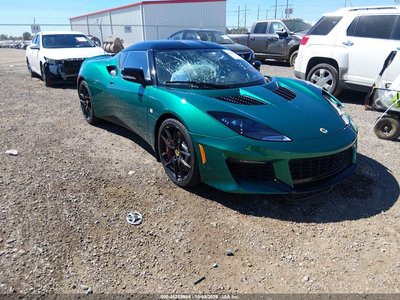
Current bid Preliminary bid $14,600 USD
Vehicles sold “as is - where is”, all sales are final.
- Condition Won’t start
- VIN SCCLMDVN0HH******
- Lot number 46258954
- Location LA - Scott
- Damage Left front
- Odometer 8,997 mi (actual)
- Date of auction
- Seller
Time left to place preliminary bid
- days
- hours
- min
- sec
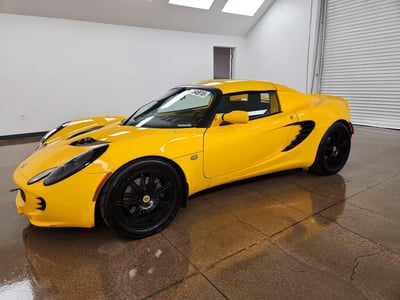
Current bid Preliminary bid $0 USD
Vehicles sold “as is - where is”, all sales are final.
- Condition Run and drive
- VIN SCCPC11195H******
- Lot number 70546916
- Location NV - Las Vegas North
- Damage Normal wear & tear
- Odometer 65,894 mi (not actual)
- Date of auction
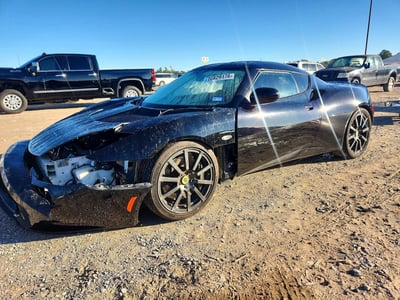
- Condition Run and drive
- VIN SCCLMDTU3AH******
- Lot number 76829176
- Location TX - Houston
- Damage Front end, undercarriage
- Odometer 55,100 mi (not actual)
- Date of auction Auction date is not assigned
- Seller
Frequently asked questions about salvage Lotus cars
Run and drive records limited operation when the auction assessed the vehicle. Roadworthiness and mechanical soundness remain unverified, and condition can change before pickup. For a performance car, arrange a condition check before road use.
Check the Odometer status with the displayed mileage. NOT ACTUAL means the reading does not correctly reflect the vehicle’s mileage or the true mileage cannot be determined. A low displayed number therefore cannot establish a low-mileage car. Use available history and service records to investigate mileage.
Look for waterlines, moisture, contamination, and corrosion in hidden areas, wiring, and connectors. Water-related damage may become apparent later, so use vehicle history and further inspection to investigate water exposure beyond the auction photos.
Get one when an unanswered condition question could materially affect your bid. Where inspection is available, additional photos and video can help investigate areas the listing does not show clearly. Request it early enough before the auction.
Check the VIN through NHTSA and Lotus recall information. Lotus lists model-specific Elise and Evora campaigns. NHTSA VIN results can omit recalls older than 15 years and campaigns from some small manufacturers, so confirm the full VIN with Lotus as well.
A salvage Lotus for sale can carry expensive repair uncertainty even when the visible auction damage looks limited. For these performance cars, the exact model, year, and configuration determine which technical and cost assumptions are relevant, so two Lotus lots with similar reported Damage can still represent very different projects.
CARS4.BID brings Lotus inventory from Copart and IAAI into one catalog. When evaluating a car, use its Damage to identify the first questions that need to be resolved before you estimate the repair. The stronger candidate is the one whose individual lot information lets you reduce the important unknowns before you decide what the car is worth to you.
Know the exact Lotus before bidding at a Lotus Elise auction
Before you estimate repairs on a salvage Lotus Elise or Evora, identify the exact model, year, and configuration in the auction listing. Lotus has changed its sports-car architecture across generations. Emira, for example, uses a new Sports Car Architecture, and Lotus states that every chassis dimension differs from its previous chassis. Within Emira, engine, transmission, and Tour or Sports chassis settings can also change which technical specifications and parts information apply.
For the Lotus you are considering, check:
- model, model year, and identifiable configuration;
- Drivetrain, Fuel, and Transmission listed for the lot;
- VIN history and independently verifiable configuration details;
- Lotus technical and parts information applicable to that specific car.
If those details conflict, resolve the car’s identity before assigning exact parts or repair assumptions.
The same rule applies when researching Lotus Evora salvage parts. Lotus provides official parts information for current and legacy cars, with its parts platform covering models dating back to 1981 and specifically including Elise and Evora. Use it to narrow the correct application, then verify the exact part against the car’s year and configuration.

How far can damage extend on wrecked Lotus cars?
The visible damage on a Lotus does not tell you where the impact stopped. On an Elise, exterior composite panels do not provide chassis rigidity, while the front crash structure sits ahead of the aluminium chassis and supports the radiator area. This gives you a path to trace beyond the damaged exterior.
Follow it in order:
- start with Damage, Primary damage, and Secondary damage;
- trace the visible impact from the exterior panel into its attachment and supporting areas;
- compare wheel position, panel gaps, openings, and displaced mounting points from side to side;
- continue toward exposed cooling components, underbody areas, the relevant subframe or wheel corner;
- identify the first structural interface that the available photos do not show clearly.
On a damaged Lotus Elise, a wheel sitting differently in its opening, a displaced panel attachment, or damage continuing toward a subframe or suspension mounting area tells you where to investigate next. None of these observations establishes chassis movement or alignment.
A wrecked Lotus Evora for sale requires the same check at different structural interfaces. Its aluminium central tub works with front and rear structural sections, while the engine and transmission are carried by a rear steel subframe. If damage approaches one of these interfaces, make it the next verification target. If the photos stop before that point, leave its condition Unknown.
What makes repairable Lotus cars viable auction projects?
For a damaged Lotus, build the repair scope around the complete assembly that must be restored, including the smaller components surrounding the obvious damage.
| Lotus repair area | What must be resolved before the repair scope is complete |
|---|---|
| Composite body / clamshell | The panel, its mounting hardware and supports, plus adjacent pieces required to reinstall it correctly |
| Wheel corner | Suspension links, upright/hub, steering and brake components, together with the geometry established through their mounting points |
| Chassis / subframe interface | Whether the relevant mounting locations and their geometry have been verified for the connected suspension or powertrain components |
| Cooling / airflow area | Radiator or cooling components, ducting, pipework, fans, mounts and other pieces required for the exact application |
Auction photos can hide another source of cost: completeness of the damaged area. On a repairable Lotus, the major damaged component may be clearly visible while smaller pieces needed to rebuild the assembly are broken, removed from the car, or simply outside the available views. Build the repair list around the complete assembly: the main component, its mounts and hardware, the systems routed through the area, and the pieces required to put everything back together.
Keep that assembly model-specific. Across Elan, Elise, Exige, Evora and Emira generations, the construction and component relationships are not interchangeable. For Lotus Elise salvage, keep every unresolved component tied to the year and configuration you established for that car. Before bidding, classify every required piece as confirmed present, confirmed damaged or missing, or still Unknown. The Unknown group tells you which parts of the repair scope still need to be resolved.

How does Document type change the value of a salvage Lotus project?
Before bidding on a Lotus, match its Document type to the intended use of the car. CARS4.BID groups ownership documents under Clean, Salvage, Non repairable, and Other. The document can change how the finished car may be used even when its physical repair scope is already clear.
| Document type | What it means for this Lotus project |
|---|---|
| Clean | Do not assign the car a clean-condition value from the document alone. Clean identifies the current ownership-document category. It does not establish the Lotus’s current condition or complete repair history. |
| Salvage | At a Lotus salvage auction, confirm that the exact ownership document works for your intended use. Salvage criteria vary by jurisdiction, so check the applicable rebuilding, inspection, titling, and registration requirements before bidding. |
| Non repairable | Identify the exact document before committing to a rebuild. This category can include bill of sale, junk, or scrap documents, and the vehicle may be intended for parts or scrap or lack paperwork needed to complete the transaction. |
| Other | Check the exact paperwork with the relevant motor-vehicle authority before planning to register the Lotus. The category itself does not establish whether registration will be possible. |
For a damaged Lotus for sale, the broad Document type category is only the first check. Read the exact ownership document listed for the individual lot. A physically repairable car can still carry paperwork that changes what you can legally do with it after the work is completed.
The document also affects your choice of comparable. For a rebuilt Lotus intended for road use, use comparable vehicles with ownership status that supports a similar post-repair use. This keeps the value benchmark aligned with what the finished Lotus can actually be used for.

How do you set the maximum bid and buy a wrecked Lotus for sale?
Once you have set the most you will pay for the Lotus itself, enter that amount as your maximum bid. CARS4.BID can bid incrementally on your behalf up to that limit. A $20,000 maximum can therefore produce a lower winning bid when competing bids stop earlier.
Before bidding, make sure your bid power covers your ceiling. The minimum deposit is currently $600, providing up to $6,000 in bid power for one vehicle. Above $6,000, the deposit must equal at least 10% of your maximum bid. A $20,000 ceiling therefore requires at least a $2,000 deposit.
For a Lotus car auction, separate the amount due after the auction from the additional cost of transporting the vehicle:
Amount due = winning bid + applicable auction fees + CARS4.BID transaction fee + documentation fee
Acquisition cost = amount due + transportation + applicable loading, unloading, or other logistics costs
Before you bid, enter your maximum into the Price Calculator on the lot page. It shows additional costs, estimated delivery, and estimated final cost for that bid amount.
Transportation deserves a separate check when you buy a salvage Lotus. The shipping estimate shown by CARS4.BID is typically based on a Run and drive vehicle. A Lotus that cannot run and drive or has no keys may require special handling and additional loading or unloading charges.
If you win, CARS4.BID sends the invoice and payment instructions. You can then arrange transportation through CARS4.BID or use your own transporter.
Ready to bid on a Lotus?
CARS4.BID is a registered Copart buyer and licensed IAAI broker. You choose the Lotus and set your bidding limit. CARS4.BID supports the purchase process from bidding through paperwork and transportation arrangements. When your choice and maximum bid are set, place your bid through CARS4.BID.